
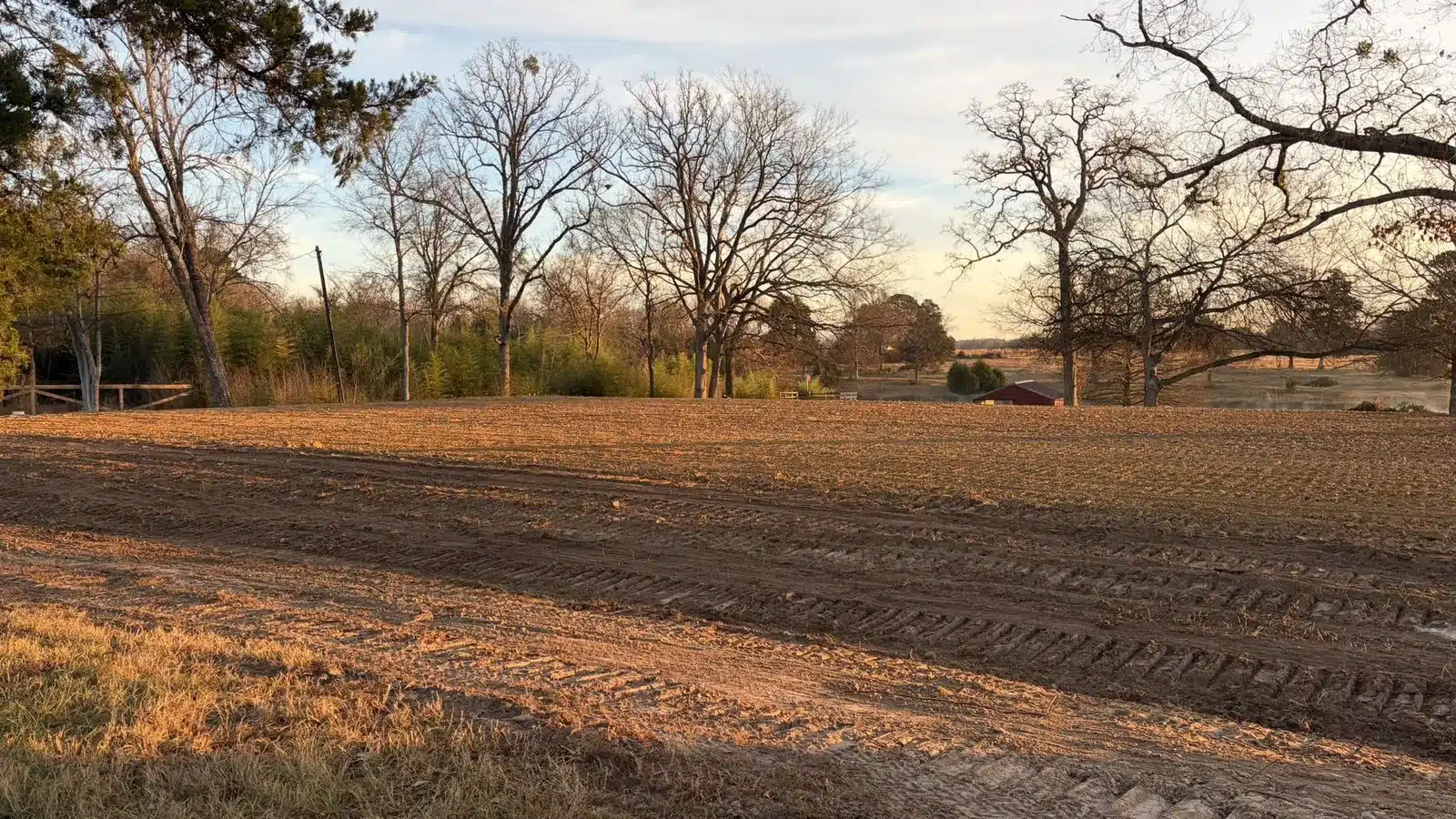
For a one-acre East Texas lot with moderate vegetation, professional land clearing often takes one to three working days. Winter rain, soft soil, dense timber, narrow access, debris removal, or construction-ready finish work can add time. A site walk is the only sound way to set the schedule.
If you’re asking how long does land clearing take in winter, acreage is only the starting point. The method and finish level can change the answer by days. Kingdom’s complete guide to land-clearing methods and costs explains the full process. This guide focuses on the winter calendar.
How Long Does It Take to Clear One Acre in Winter?
Question: How long does land clearing take for one acre in winter? Answer: A moderate one-acre lot often takes one to three working days when equipment can reach the site and the ground can support it. Dense trees, stump removal, hauling, grading, or rain delays can extend the job.
Use the ranges below for early planning, not as a promised schedule:
| Property and scope | Planning range |
|---|---|
| Light brush on an accessible acre | About one working day |
| Moderate brush and small trees | About one to three working days |
| Dense timber, large stumps, or difficult access | Several days or longer |
| Clearing plus haul-off, grubbing, or final grading | Add time based on scope |
These ranges cover active work. They don’t include time for a site visit, utility marking, permit checks, weather holds, or equipment delivery. A project can involve one day of machine work but still span several calendar days.
Did You Know: Winter does not automatically mean frozen, firm ground in East Texas. A cold week may offer good working conditions, while repeated rain can leave the same property too soft for responsible equipment use.
What Changes a Winter Land-Clearing Timeline?
Cold weather gets most of the attention, but it is rarely the main scheduling issue. In East Texas, soil moisture and access often matter more. Dry, stable ground can carry tracked equipment well. Saturated soil may rut, compact, or become unsafe near slopes and drainage areas.
The USDA Web Soil Survey lets landowners view general soil information for a property. It is useful for early planning, but the USDA states that some engineering and conservation decisions still need an on-site review.
Rain and soil condition
A crew may pause after heavy rain even when the sky is clear. The question is whether the soil can support the equipment without causing damage that creates more grading work later. Low areas, clay-heavy sections, creek approaches, and soft access roads may need more drying time than higher ground.
Vegetation and tree size
Light brush moves faster than mature hardwoods. Large trees may need to be cut, handled, and stacked one at a time. Stumps can also change the scope. Grinding a stump below grade is different from pulling the full root mass from a future house-pad area.
Access and protected areas
A wide gate and firm approach help a crew start quickly. Narrow entrances, overhead lines, fences, structures, marked trees, or drainage areas can slow movement. The Texas A&M Forest Service notes that mechanical site preparation needs equipment access and that treatment areas and objects to avoid should be clearly marked.
Pro Tip: Walk the site before the work date and mark property lines, keep trees, septic parts, wells, utilities, and wet areas. Clear decisions prevent machine time from being spent waiting for answers.
Why the Clearing Method Changes the Schedule
Two one-acre lots can take different amounts of time because the owners want different finished results. One owner may want brush reduced while keeping the soil covered. Another may need trees, stumps, roots, and debris removed before a house pad is built.
Forestry mulching
Forestry mulching cuts and grinds brush and smaller trees, then leaves the material on the ground. It can reduce separate pile, burn, or haul-off steps. Texas A&M Forest Service explains that dense brush may need more than one pass and that machine speed changes with vegetation thickness.
Mulching has limits. Very wet areas, steep slopes, large rocks, and big timber may call for another method or a mixed plan. Kingdom’s forestry mulching and traditional clearing comparison shows where each approach fits.
Traditional clearing
Excavators, dozers, and skid steers can remove larger trees and prepare areas that need bare ground. The active clearing may move quickly, but debris still needs a plan. Piling, grinding, burning where legal, or hauling material away can add equipment time and truck trips.
Selective or mixed clearing
Many properties need more than one method. A crew might mulch an outer area, remove larger trees near a build site, and grub roots only where construction will happen. This may take longer than a single-pass job, but it avoids disturbing parts of the property that do not need full clearing.
Did You Know: “Cleared” and “ready to build” are not the same finish. A clean-looking lot may still need grubbing, drainage work, grading, compaction, and soil testing before construction starts.
Five Details That Can Add Days
A realistic estimate should answer five questions before equipment arrives.
- How dense is the vegetation? Thick brush, vines, mixed timber, and hidden debris slow each pass. Photos help, but they do not replace a site visit.
- What must happen to stumps? Stumps can stay, be ground below grade, or be removed with their root systems. Construction zones often need more work than pasture or trail areas.
- Where will the debris go? Mulch can remain on site. Logs and brush may be stacked, processed, burned where allowed, or hauled away. Every extra handling step adds time.
- Can trucks and machines reach the work area? Soft entrances, narrow gates, weak crossings, and tight turns may require a different machine or access work first.
- What should the site look like at handoff? Brush reduction, clean clearing, rough grade, and construction-ready grade are different scopes. Put the finish level in the quote.
Pro Tip: Ask for the estimate to separate clearing, stump work, debris handling, and grading. You will see which part drives the schedule and can compare bids on the same scope.
Kingdom’s land-clearing services in Athens and East Texas include brush removal, tree and stump work, lot clearing, and grading. Matching the equipment to the next use of the land is more useful than choosing a method by name alone.
How to Plan a Winter Clearing Project
Start with the date you need the land ready, then work backward. Leave room for a site walk, scope changes, utility marking, weather, debris handling, and any follow-up grade work. A rigid one-day window creates trouble when rain changes the ground.
Take current photos of the entrance, tree density, slopes, low spots, and nearby structures. Share what the land will become: a home site, driveway, pond, fence line, pasture, or open yard. That end use guides how much clearing and root work is needed.
Before signing, ask what conditions would cause a weather hold and how the crew will communicate a new start date. Also ask whether the quote covers mobilization, cleanup, and the final site walk. A clear scope makes the timeline easier to trust.
Get a Timeline Built for Your Property
A moderate one-acre lot may take one to three working days, but winter rain and soft ground can change the calendar. Vegetation, access, stumps, debris, and the required finish matter just as much as acreage.
Kingdom Land & Construction serves Athens and surrounding East Texas communities. Request a site visit and property-specific timeline before setting your next construction or land-use date.
Frequently Asked Questions
Can land clearing be done during winter in East Texas?
Yes. Land clearing can be done during an East Texas winter when access and soil conditions support the equipment. Repeated rain may cause a weather hold even on a mild day, so keep flexibility in the schedule.
Does forestry mulching take less time than traditional clearing?
It can when brush and smaller trees are the main problem because material is processed on site. Large timber, stumps, steep terrain, or a need for bare construction ground may call for traditional equipment or a mixed plan.
Does rain stop land clearing immediately?
Not every rain stops work. The crew must judge traction, soil support, slope, drainage, and the risk of rutting or compaction. A site may need drying time after the rain ends.
Is one day enough to clear one acre?
One day may be enough for light brush on an accessible acre with a simple finish. Moderate growth often takes one to three working days, while dense timber, stump removal, haul-off, or grading can require more time.