
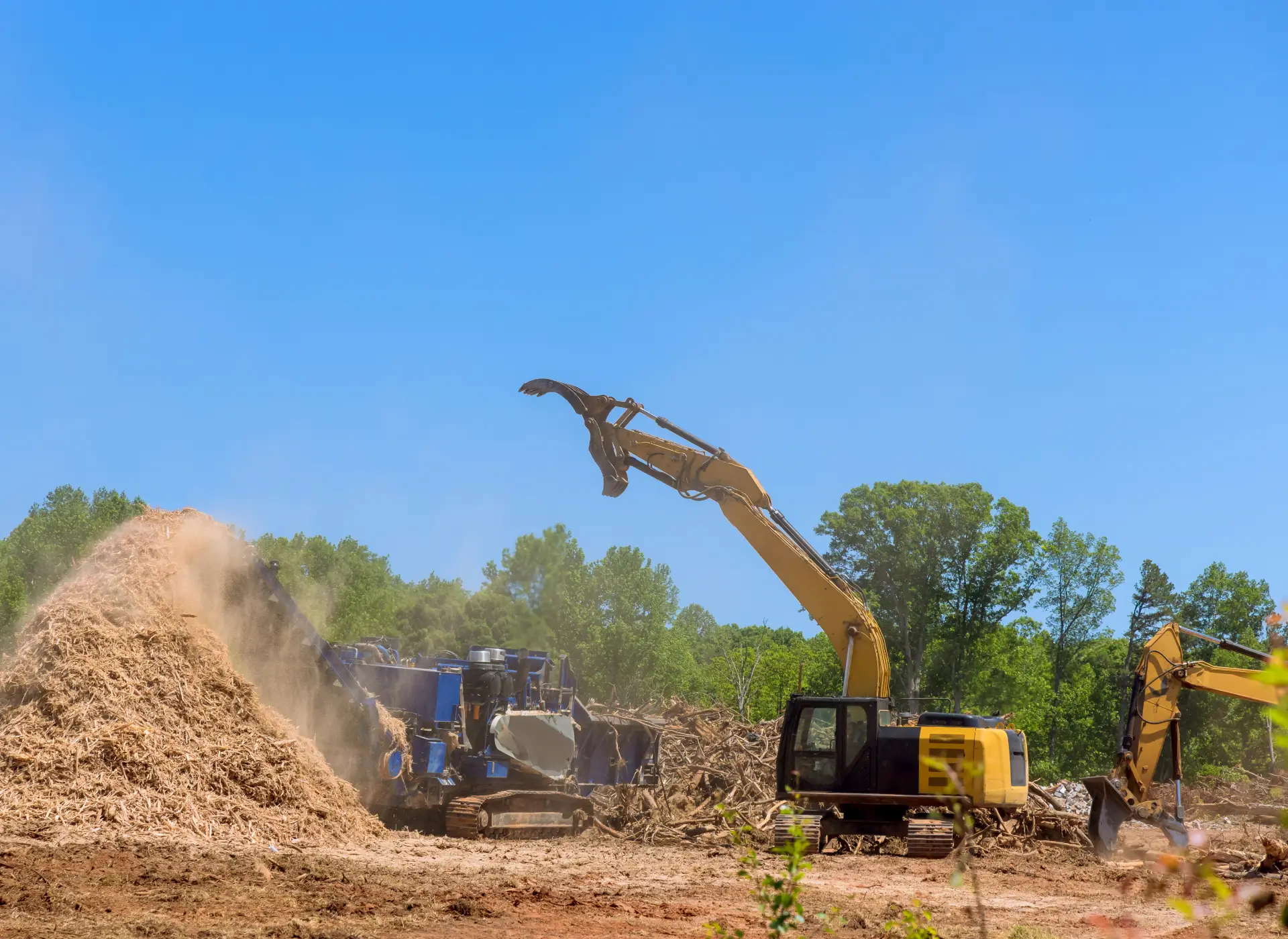
Forestry mulching and traditional land clearing both remove brush and trees from your property, but they solve different problems. Mulching grinds vegetation into a mulch layer that protects your topsoil and skips the haul-off. Traditional clearing uses heavy equipment to push, pull, and scrape land down to bare dirt. The right method depends on your acreage, what’s growing on it, and what you’re building next.
Did You Know: Many properties around Henderson County carry dense stands of Eastern red cedar and mesquite. Brush like this spreads fastest on rangeland where grass cover has thinned from heavy grazing or years without fire to keep it in check — once grass loses that competitive edge, cedar and mesquite move in fast. Left alone, thick cedar can pull a large share of rainfall before it ever reaches your grass. That’s one reason so many East Texas landowners ask about mulching first.
What’s the Real Difference Between the Two Methods?
Forestry mulching uses one machine with a rotating drum head to cut, grind, and spread brush and small trees into mulch in a single pass. Nothing gets hauled off or burned. Traditional land clearing, sometimes called mechanical clearing, uses bulldozers, excavators, and skid steers to push and pull vegetation into piles, which then get burned or trucked away. For more on how the equipment behind each method actually works, Texas A&M Forest Service breaks down mulching operations in detail.
Both methods clear land. They just leave your property in very different shape once the work is done, and that difference matters more than most property owners expect going in.
Where Forestry Mulching Wins
Residential Lots and Small Acreage
On lots under a few acres, mulching usually costs less and finishes faster because there’s no separate debris-removal step. A small residential lot can often be mulched in a single pass, while the same lot cleared with a dozer takes longer once you add pile-up, burning, or haul-off time. The mulch layer left behind also holds moisture and cuts down on erosion while you plan your next step, whether that’s a driveway, a house pad, or just a cleaner yard.
Pasture and Brush Reclamation
If your goal is restoring grazing land taken over by cedar or brush, mulching keeps your topsoil in place instead of scraping it off. Ranchers reclaiming pasture around Athens often see grass return faster on mulched ground than on bulldozed ground, since the root structure and soil layers stay mostly intact. The mulch layer also breaks down over time into organic matter, which feeds the soil instead of sitting there as waste.
Environmental Impact: Which Method Is Gentler on Your Land?
Mulching wins here in most cases. Keeping topsoil in place reduces runoff after heavy rain, and the mulch layer suppresses weed growth without chemicals. Mechanical clearing isn’t automatically bad for the environment, but it does expose bare soil until grass or ground cover gets established, which is a real window for erosion on sloped East Texas land. If erosion control matters to you, ask your contractor how they plan to stabilize bare ground after a mechanical clear.
Pro Tip: Mulching works best on brush and trees under about 8 to 10 inches in diameter. Anything bigger usually needs a stump grinder or an excavator pass first.
Where Traditional Clearing Still Wins
Mulching gets a lot of attention right now, and for good reason. But we don’t recommend it for every property, and we say so upfront even when it means a smaller invoice for us.
Land With Valuable Standing Timber
If you have mature hardwood or pine you plan to sell as logs, mulching destroys that value in seconds. We’ve walked properties near Brownsboro where the landowner assumed mulching was the obvious modern choice, then realized the timber on their land was worth more standing than mulched. In cases like that, we recommend a selective harvest first, then mechanical clearing or mulching for whatever’s left. Texas A&M AgriLife Extension’s brush management guide covers several traditional mechanical methods worth understanding before you choose.
Sites That Need a Fully Scraped, Level Surface
House pads, ponds, and some driveway projects need bare, compacted ground, not a layer of mulch sitting on top of it. For those jobs, mechanical clearing that strips vegetation and topsoil down to grade is the right call, even though it costs more and takes longer.
Did You Know: Root systems on large hardwoods commonly spread two to three times the width of the tree’s canopy, often reaching much farther than property owners expect. If a house pad or driveway will sit close to a tree line, those roots often need to come out regardless of which clearing method you choose.
Cost Comparison: What You’ll Actually Pay in East Texas
| Factor | Forestry Mulching | Traditional Clearing |
| Typical cost per acre | $1,500–$3,000 (light-moderate brush), up to $5,000 for dense cedar | $2,500–$6,500 (includes debris removal) |
| Debris removal fees | None; mulch stays on-site | Often required (burning or haul-off) |
| Speed on brushy land | Faster | Slower |
| Best for large timber | Not suited | Better suited |
| Topsoil impact | Minimal | Can be significant |
These numbers shift with vegetation density, terrain, and site access, so a walk-through still beats any online estimate. For a full breakdown of clearing methods, permits, and cost factors, see our complete guide to land clearing.
Pro Tip: Ask any contractor quoting your project whether debris removal is included in the price. That’s the line item that turns a cheap mechanical clearing bid into an expensive one.
How We Decide Which Method Fits Your Property
When we walk a new site, we look at four things: what’s growing there, what you’re building next, whether any timber has resale value, and how debris will get handled. Mulching wins more often than not on East Texas brush and cedar, but we’d rather lose an easy mulching job than recommend the wrong method for your land. That’s true whether you need our forestry mulching services or full land clearing services for a larger project.
Most projects don’t fall neatly into one category or the other. It’s common for us to mulch the brush and understory on a property, then bring in an excavator for the specific area where a house pad or pond is going. Splitting the work that way often costs less than clearing the whole site with heavy equipment, while still giving you the scraped, level ground your builder or pond crew needs.
Frequently Asked Questions
Is forestry mulching cheaper than traditional land clearing?
Usually, yes. Forestry mulching typically runs $1,500 to $3,000 per acre for light to moderate brush, compared to $2,500 to $6,500 per acre for mechanical clearing with debris removal. Dense cedar or hardwood can push mulching costs toward $5,000 per acre, but it still tends to beat hauling debris off-site.
Does forestry mulching kill invasive cedar for good?
Mulching removes the above-ground growth, but cedar and mesquite can resprout from the root system. Many landowners follow mulching with a herbicide application or periodic mowing to keep regrowth down long-term.
Can I still sell my timber if I choose forestry mulching?
No. Mulching destroys standing timber, so any resale value is gone once the mulcher passes through. If your land has mature hardwood or pine worth harvesting, talk to us about a selective cut before clearing begins.
Which method is better for a house pad or driveway?
Traditional mechanical clearing is usually the better choice for house pads and driveways because those projects need scraped, compacted ground rather than a mulch layer. We often combine methods: mulch the brush first, then bring in equipment for the final grade before house pad work starts.
Ready to Choose the Right Method for Your Land?
Forestry mulching and traditional clearing both have a place in East Texas land prep. The right one for you depends on what’s growing on your property and what you’re building next, not on which method happens to be trending.
Kingdom Land & Construction walks every property before recommending a method, so you get a plan built for your land instead of a one-size answer. Contact us today for a free site visit and an honest recommendation.